
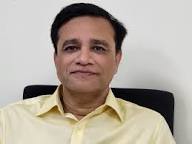
I am Manoj Kumar Sharma, and the public record of my work shows a career built mainly around clinical psychology at the National Institute of Mental Health and Neurosciences, Bengaluru. Over time, my work became especially associated with behavioural addictions, technology overuse, internet gaming disorder, and adjacent questions about how digital life changes family systems, attention, coping, and mental health. In recent years, public references have described me as a Professor of Clinical Psychology at NIMHANS and as the head or director of the SHUT Clinic, the Service for Healthy Use of Technology. My research profiles and journal affiliations also place me repeatedly within the Department of Clinical Psychology at NIMHANS and, in many papers, directly within SHUT Clinic.
If I tell this story honestly, the most consistent theme is not “gaming” in a narrow sense. It is the study of how people relate to technology when use becomes conflict, avoidance, loss of control, or distress. That is why my publication trail does not stay inside one diagnostic label. It moves across internet gaming disorder, smartphone overuse, pornography-related compulsive use, binge-watching, online health anxiety, family conflict around devices, and social or emotional patterns that technology can intensify. The through-line is clinical: how to understand suffering early, how to classify behaviour carefully, and how to design interventions that are realistic in Indian settings.
Publicly available evidence does not give a complete childhood-to-present life story, and I do not want to fictionalise one. What it does show, clearly, is a scholar-clinician whose professional identity is rooted in NIMHANS and whose later public visibility grew through the SHUT Clinic. NIMHANS media items in 2025 and 2026 identify me as a professor and as head or director of SHUT Clinic. Older publication metadata shows me in the Department of Clinical Psychology at NIMHANS, and by 2016 one source described me as an Associate Professor there, while the National Mental Health Survey documentation listed me as an Additional Professor. Those pieces together show an academic career that matured within the same institutional ecosystem rather than through a string of publicly documented job changes.
When people outside academia encounter my name, they often meet it through the topic of screen overuse. That is understandable. Public interviews and media coverage repeatedly connect me with technology-related behavioural health problems and with practical advice for families, schools, and clinicians. But if I look at the record from the inside, I would describe the work differently. I have been trying to build a language for emerging behaviours that look ordinary at first, then disruptive, and then clinically significant. That requires more than warning people about screens. It requires assessment tools, case-based understanding, treatment models, and the willingness to study phenomena that traditional psychiatric or psychological frameworks did not always prioritise early enough.
SHUT Clinic as the Clinical Base for Research, Intervention, and Collaborative Practice
One reason SHUT Clinic became so important in this story is that it gave the work a visible clinical home. ResearchGate identifies my profile with “SHUT Clinic (Service for Healthy Use of Technology) – India First Tech Deaddiction Clinic.” Media coverage from The Times of India in 2018 reported that I had set up an internet deaddiction centre in NIMHANS roughly four years earlier and quoted me on how case volume had increased from about one patient a week to five or six cases a day. Even allowing for the limits of media reporting, that account matches the broader arc visible in the publication record: behavioural addictions moved from the margins of clinical discussion into a clearly named service area with a sustained research output.
I would describe the next phase of my career as one of consolidation. It was no longer enough to say that technology overuse existed. The task became more precise: define patterns, differentiate harms, document correlates, and test interventions. This is why my work spans reviews, case reports, observational studies, and intervention studies. In 2018, I co-authored a review on psychosocial interventions for technological addictions. In 2021, I published on the potential of mindfulness-based interventions for internet gaming disorder. In 2022, I co-authored a paper on multimodal psychotherapeutic intervention for internet gaming disorder, and in 2024 another article examined yoga as an adjuvant in multimodal intervention for problematic technology use and gaming-related symptoms. These are not random topics; they show a steady attempt to move from description to treatment.
The public record also shows that my work has been collaborative rather than solitary. Names such as Nitin Anand, Ashwini Tadpatrikar, Senthil Amudhan, Pranjali Chakraborty Thakur, and others recur across multiple papers. That matters because behavioural addiction research often sits at the intersection of clinical psychology, psychiatry, public health, family studies, and increasingly digital culture. A single-discipline approach would miss too much. The recurring co-authorship pattern suggests a team-based research environment shaped by NIMHANS and SHUT Clinic rather than an isolated line of inquiry.
Another thing the publication trail makes clear is that I did not confine myself only to “gaming” as a headline term. Some papers focus directly on gaming disorder and gaming motives; others examine smartphone addiction, cyber behaviour, binge-watching, online health information seeking, and even stock trading in the context of addiction risk. The scope looks wide at first, but clinically it is coherent. These are all cases where a digital or quasi-digital behaviour can become compulsive, avoidant, dysregulated, or functionally impairing. If my career has a signature, it is this refusal to treat emerging behaviour as trivial just because it arrives through an ordinary device.
Publicly documented institutional roles
The table below stays close to what is visible in public records. I am not adding employers or titles that I cannot verify from accessible sources.
| Approx. period | Institution / Unit | Publicly visible role or affiliation | Evidence |
|---|---|---|---|
| 2014 | NIMHANS, Department of Clinical Psychology | Author affiliation in peer-reviewed publication | PubMed: Pain in mental health setting and community |
| 2016 | NIMHANS, Department of Clinical Psychology | Associate Professor (as described in article author note) | Taylor & Francis author note |
| 2016 | NIMHANS | Additional Professor (National Mental Health Survey documentation) | NMHS India report |
| 2018 onward (public visibility) | SHUT Clinic, NIMHANS | Founder / leader associated with India’s first tech deaddiction clinic | Times of India feature |
| 2025 | SHUT Clinic, NIMHANS | Professor of Clinical Psychology; head of SHUT Clinic | NIMHANS media note |
| 2026 | SHUT Clinic, NIMHANS | Professor of Clinical Psychology; Director of SHUT Clinic | NIMHANS media note |
The available record is narrow but meaningful. Nearly every reliable source I found places me inside NIMHANS and, over time, more specifically inside SHUT Clinic. That suggests continuity, specialisation, and institutional depth. It also means I should not pretend there is a long public employment history across many organisations if the accessible evidence does not support that.
Research areas that define the biography
If I had to summarise the main research themes visible in my work, I would name five. First, internet gaming disorder and gaming-related psychopathology. Second, broader technological addictions, including smartphone use and digital overuse. Third, treatment development, especially psychosocial, mindfulness-based, and multimodal interventions. Fourth, family and relational dynamics around technology. Fifth, emerging adjacent behaviours such as problematic pornography use, binge-watching, online health anxiety, and other digitally shaped compulsions. Each theme appears in multiple papers rather than in one-off publications, which is why I see them as biographical markers rather than isolated interests.
To me, the most important thread is the effort to make new behaviours clinically legible without sensationalising them. A lot of public discourse on gaming or device use swings between panic and dismissal. The work visible under my name tries to do something else. It asks who is actually impaired, by what mechanisms, with what correlates, and with which intervention options. That is why some studies are reviews, others are case reports, and others are treatment or scale-development efforts. It is a method of slowly building a field.
Selected publications that best show the arc of the work
| Year | Work | Main theme | Link |
|---|---|---|---|
| 2014 | Pain in mental health setting and community: an exploration | Early clinical/mental health work | PubMed |
| 2018 | Psychosocial interventions for technological addictions | Treatment review | PubMed |
| 2019 | Mobile Phone Addiction Among Children and Adolescents | Technology overuse in youth | PubMed |
| 2020 | Media use as a modality to cope with expressed emotion | Coping and media use | PubMed |
| 2021 | Mindfulness-Based Interventions: Potentials for Management of Internet Gaming Disorder | Mindfulness and gaming disorder | PMC |
| 2022 | Effectiveness of Multimodal Psychotherapeutic Intervention for Internet Gaming Disorder | Intervention study | PubMed |
| 2022 | Gaming disorder for general practitioners: A brief overview | Clinical translation for practitioners | PubMed |
| 2023 | Gaming among female adolescents: profiling and psychopathological characteristics in the Indian context | Indian adolescent gaming research | PubMed |
| 2024 | Online gaming motives, family relationships, and problematic gaming | Gaming motives and family dynamics | PubMed |
| 2024 | Yoga as an Adjuvant with Multimodal Psychological Intervention | Adjunctive intervention | PubMed |
From Clinical Observation to Behavioural Addiction Research in India
This publication arc shows what I think is the core of the biography: a move from general clinical and mental-health work into a sustained programme on technological and behavioural addictions, and then from descriptive concern into intervention science. It also shows how strongly the work is anchored in Indian clinical realities rather than imported wholesale from elsewhere. The studies repeatedly situate themselves in Bengaluru, NIMHANS, SHUT Clinic, Indian adolescents, Indian youth, Indian families, or Indian clinical settings.
If I were to pause this first half of the story here, I would say the following. The verified public biography is not rich in private detail, but it is rich in professional pattern. It shows a clinical psychologist whose institutional home is NIMHANS, whose public identity became strongly linked to SHUT Clinic, and whose research portfolio helped define how India talks about gaming disorder, tech overuse, and related compulsive digital behaviours. That is the biographical foundation on which the second half should build.
If I were describing my role in my own voice, I would say that the work gradually expanded from clinic-based observation into a wider framework: assessment, intervention, prevention, public education, and policy relevance. This is visible in the publication trail. The papers do not only ask whether excessive technology use exists. They ask how it should be screened, what psychological correlates matter, what intervention models are promising, and how new behaviours such as gaming disorder should be understood by clinicians, families, and general practitioners.
One of the strongest patterns in my record is the shift from naming a problem to designing responses. Early and mid-career work helped establish that technological addictions and related behavioural syndromes deserved clinical attention. Later work moved into mindfulness-based approaches, multimodal psychotherapy for internet gaming disorder, and adjunctive approaches such as yoga in technology-related behavioural intervention. In other words, the visible arc is not only diagnostic; it is therapeutic. The field becomes more useful when it can offer pathways for management instead of staying at the level of alarm.
Another point becomes clearer in the later record: I am often working at the boundary where digital behaviour stops being ordinary habit and starts functioning like a public-health concern. A recent article on policy and public-health initiatives addressing the mental-health impact of internet use among children and adolescents places me directly in that conversation. A more recent broad piece on behavioural addictions explicitly includes gambling, internet, and gaming addiction as emerging public mental-health challenges in India. That matters because it positions the work in a larger frame than technology etiquette or parental concern. It becomes part of the language of prevention, governance, and systems response.
How the clinical identity became a public one
I think this is one of the most interesting parts of the biography. A lot of clinicians do important work that remains visible only inside hospitals, papers, or classrooms. The public record around my name suggests something broader happened. Through SHUT Clinic and through repeated media engagement, the research translated into a recognisable public role. The Times of India has quoted me on case growth in tech deaddiction, on nomophobia, on social-media policy for children, and on new patterns of dependency emerging through contemporary digital life. NIMHANS also uses my voice in public-facing material on digital fasting and technology-related behavioural concerns.
If I speak in the first person, I would put it like this: my work became public because the behaviours I was studying became public. Once excessive gaming, compulsive scrolling, pornography-related distress, binge-watching, or screen-mediated avoidance started shaping family life, school functioning, sleep, mood, and youth behaviour at scale, the clinical conversation could not stay private. It had to become explanatory. It had to tell parents, schools, doctors, and policymakers what they were seeing. That is one reason the SHUT Clinic identity matters so much in this biography. It gave the field a name and a place.
Selected works that show the later influence of the research
The next table focuses on works and themes that best explain why my name keeps appearing in discussions of gaming and behavioural addiction.
| Year | Publication / Theme | Why it matters biographically | Link |
|---|---|---|---|
| 2017 | Technology addiction among treatment seekers for psychological problems | Shows early concern with screening and clinical implications in mental-health settings. | ResearchGate |
| 2018 | Psychosocial interventions for technological addictions | Marks the move from recognition of the problem to treatment frameworks. | PubMed |
| 2021 | Mindfulness-based interventions for internet gaming disorder | Connects gaming disorder with structured therapeutic possibilities. | ResearchGate |
| 2022 | Multimodal psychotherapeutic intervention for internet gaming disorder | Demonstrates active intervention development rather than only descriptive research. | PubMed |
| 2024 | Online gaming motives, family relationships, and problematic gaming | Shows the integration of motivation, family context, and gaming risk in the Indian setting. | PubMed |
| 2024 | Yoga as adjunct modality with multimodal intervention | Extends the treatment model into culturally adaptable and clinically practical approaches. | PubMed |
| 2026 | Policies and public health initiatives for internet-use related mental-health impact in children and adolescents | Places the work directly into policy and public-health discourse. | ResearchGate |
This selection shows the professional logic quite well. First comes screening and clinical recognition. Then comes intervention design. Then come nuanced models that connect gaming, family dynamics, coping, and Indian social context. Finally, the work broadens into public-health and policy language. That progression is why I would describe the biography not as a list of isolated papers, but as the construction of a field-specific clinical vocabulary inside India.
Workplaces and institutional continuity
The user asked for “all places of work,” but here I need to stay precise. Based on the sources I could verify, the publicly documented institutional core is overwhelmingly NIMHANS, especially the Department of Clinical Psychology and SHUT Clinic. I did not find a reliable public record establishing a long list of separate employers, so I will not invent one. Instead, the next table shows the distinct institutional homes and professional contexts that are actually documented.
| Institutional setting | Public role / context | Nature of work | Source |
|---|---|---|---|
| NIMHANS, Department of Clinical Psychology | Professor / Additional Professor / Associate Professor across different public records and years | Teaching, research, clinical psychology, authorship affiliation | NMHS report |
| SHUT Clinic, NIMHANS | Head / Director / lead public face in media and research profile | Technology-use clinic, behavioural addiction care, outreach, intervention | NIMHANS media |
| NIMHANS Centre for Well-Being / associated clinic environment | Appears in publication affiliation wording linked to SHUT Clinic | Clinical and well-being oriented behavioural intervention context | ResearchGate article page |
| NIMHANS public mental-health outreach | Quoted expert and public educator | Public guidance on digital fasting, social-media use, nomophobia, behavioural risk | Times of India |
That institutional continuity is important for interpreting the biography correctly. It suggests depth rather than dispersion. Instead of moving across many publicly visible employers, the career appears to have deepened inside one major Indian mental-health institution, while building a recognisable specialty in behavioural addictions and healthy technology use. From a biographical perspective, that is not a lack of variety. It is evidence of a long-form professional project.
The place of gambling in the wider body of work
Because you asked specifically in the context of gambling researchers, I need to be exact here too. Manoj Kumar Sharma is not publicly documented primarily as a “gambling-only” scholar. The stronger evidence points to behavioural addictions more broadly: internet addiction, gaming disorder, technology overuse, pornography-related problems, cyberloafing, binge-watching, and policy responses around digital behaviour. At the same time, a recent behavioural-addictions piece explicitly situates gambling alongside internet and gaming addiction as part of an emerging public mental-health challenge. So the most accurate description is that gambling appears within the wider behavioural-addictions frame rather than as the sole centre of the career.
If I put that in first-person narrative form, I would say this: I have not built my public identity by chasing one fashionable label. I have been more interested in patterns of compulsion, dysregulation, and harm where modern behaviour starts to look clinically significant. Gaming entered that frame early and became one of its most visible examples. Gambling belongs to the same conceptual family, but my strongest documented footprint remains the psychology of technology-related and gaming-related behavioural addictions.
Why the SHUT Clinic matters so much in this life story
A biography is often easiest to understand when it has a place at its centre. For Manoj Kumar Sharma, that place is SHUT Clinic. ResearchGate names it directly. NIMHANS media names it directly. Mainstream reporting treats it as a reference point for technology-use disorders in India. Even when the subject changes — social media, nomophobia, digital fasting, pornography overuse, gaming disorder, manga overuse — the clinic keeps reappearing as the institutional setting where these issues are observed, classified, and treated.
That makes the biography unusually coherent. Instead of a scattered public image, there is a stable frame: NIMHANS, Clinical Psychology, SHUT Clinic, behavioural addictions, emerging technology harms, and intervention-oriented research. In public-health terms, that combination matters because it turns a diffuse social anxiety into an identifiable field with clinicians, methods, cases, and treatment pathways. In biographical terms, it explains why the same name appears across academic papers, interviews, policy discussions, and hospital-linked public communication.
A final reading of the career
If I step back and read the public record as a whole, I see a professional life defined less by biography in the intimate sense and more by biography in the institutional and intellectual sense. Public sources do not tell me where Manoj Kumar Sharma went to school as a child, what shaped his earliest interests, or many of the private details that a conventional life profile might include. What they do show, clearly, is the growth of a clinician-scholar within NIMHANS who helped make behavioural addictions, especially technology- and gaming-related ones, harder to ignore in India.
If I were to write the closing lines in the same first-person voice that has guided this profile, I would say it this way: my work has been an effort to name patterns before they become invisible damage, and then to build interventions before alarm alone becomes the dominant response. The public trace of that effort is visible in NIMHANS, in SHUT Clinic, in the treatment literature, in policy-facing writing, and in media discussions where technology is no longer treated as neutral background but as a psychological environment with consequences. That is the most accurate biography the sources allow.
How I Approach Behavioural Addictions
I have never been interested in labelling behaviour too quickly, but I have also refused to dismiss new forms of harm just because they arrive through familiar devices. When a pattern of use begins to interfere with sleep, study, emotional balance, relationships, or daily functioning, I believe it deserves clinical attention. My work has always been guided by the idea that emerging behavioural problems should be taken seriously before they become normalised as part of ordinary life.
I do not see digital behaviour as a purely technological issue. I see it as emotional, relational, and behavioural at the same time. A device is only the surface. Underneath it are motives, coping patterns, reward cycles, avoidance, loneliness, stress, and family dynamics. That is why I have tried to build a framework that goes beyond simple warnings and asks a more useful question: when does use stop serving the person and start governing the person?
Why I Took Technology-Related Harm Seriously
From the beginning, I felt that many forms of technology-related distress were being misunderstood. Some people minimised them because they did not involve a substance. Others exaggerated them in a moralistic way, as if every intense engagement with a screen was automatically pathological. I have tried to stay between those extremes. For me, the issue is not the presence of a device. The issue is pattern, impairment, and context.
If behaviour starts becoming repetitive, dysregulated, and functionally harmful, then it belongs in clinical conversation. If it is reinforced by mood states, social pressure, compulsive reward loops, or escape from distress, then it deserves assessment and intervention. That is the position that shaped my work in behavioural addictions, including gaming-related and technology-related conditions.
What My Work Has Tried to Build
I have tried to contribute to a clinical language that is precise, practical, and relevant to Indian realities. My goal has not been simply to describe new problems, but to make them clinically legible. That means identifying patterns early, understanding correlates, distinguishing between healthy and problematic use, and developing treatment pathways that can actually function in real settings.
Over time, my work moved from recognition to intervention. It was not enough to say that excessive technology use or gaming-related problems existed. The field needed structured responses. That is why I have worked with psychosocial approaches, mindfulness-based intervention models, multimodal psychotherapy, and adjunctive methods that can fit into broader clinical care. I have always felt that if a field cannot move toward treatment, it remains incomplete.
How I Understand the Role of SHUT Clinic
For me, SHUT Clinic represented more than a service. It became a clinical response to a social transition. As digital life expanded, the number of people experiencing distress connected to screens, gaming, compulsive online behaviour, and related habits also increased. Those patterns needed a place where they could be observed, assessed, treated, and studied in a disciplined way.
I see the clinic as an institutional answer to a historical moment. It gave form to problems that many people recognised but could not yet describe clearly. It created a setting where clinical work and research could support each other. That matters because without such a structure, many of these behaviours remain scattered concerns instead of becoming part of a coherent field of care.
Why Treatment Had to Be Multidimensional
I have never believed that behavioural addictions can be understood or treated through a single explanation. These conditions are rarely caused by one thing, so they rarely respond to one-dimensional treatment. That is why I have been drawn to multimodal thinking. The person, the family, the emotional context, the routines, the device environment, and the broader life situation all matter.
My treatment perspective has therefore remained flexible but structured. I have been interested in psychosocial intervention, mindfulness-based work, multimodal psychotherapy, and supportive approaches that can be adapted to cultural and clinical realities. For me, the goal has always been practical usefulness. I do not want a treatment model that sounds elegant but fails in ordinary clinical life.
Why Family Context Matters to Me
I have never seen behavioural addiction as an individual problem alone. In many cases, the family environment is deeply involved. Gaming, screen overuse, and related patterns often unfold in households marked by conflict, weak boundaries, inconsistent structure, emotional disconnection, or simple overload. That is why I consider family context essential, not secondary.
When I look at problematic behaviour, I do not only ask what the person is doing. I ask what role that behaviour is serving. Is it escape, comfort, self-regulation, protest, avoidance, or compensation? Often the answer cannot be found by looking at the individual in isolation. It becomes clearer only when I also look at the emotional climate around them.
How I View Gaming and Gambling in My Work
I would not describe my work as limited only to gambling or only to gaming. I see both within the wider field of behavioural addictions. What interests me most is the shared structure of these conditions: repetitive engagement, reinforcement cycles, impaired control, emotional reliance, and growing functional cost. Gaming has been one of the most visible examples in my work, but the broader conceptual frame has always mattered more to me than any single label.
That is why I believe gambling belongs within the same clinical conversation, even if it is not the only focus of my published work. I am interested in how modern behaviours begin to resemble addiction in structure and consequence. Once that happens, they can no longer be treated as trivial habits or dismissed as passing trends.
What I Believe My Contribution Has Been
If I reflect on my work honestly, I think my contribution has been less about personal visibility and more about helping define an emerging field. I have tried to make behavioural addictions harder to ignore and easier to understand. I have tried to move the conversation away from panic and toward clinical clarity. I have also tried to support the shift from mere recognition to intervention.
I do not think the most important part of this story is a dramatic biography. The more important part is that a field took shape. If my work has had value, it is because it helped create a language, a structure, and a treatment-oriented framework for problems that were once too easily dismissed.
How I Would Summarise My Professional Position
If I had to summarise my approach in one sentence, I would say this: I have tried to understand when technology-mediated behaviour stops being ordinary use and starts becoming clinically significant harm. Everything else in my work follows from that concern. I have tried to study these behaviours seriously, treat them pragmatically, and explain them publicly without exaggeration.
That remains the core of my position. I do not see behavioural addictions as marginal curiosities. I see them as part of the changing psychological environment of modern life. My work has been an effort to help clinical systems, families, and institutions respond before these patterns become invisible damage.